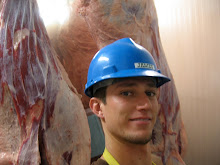
After time spent with the villagers, our class went along our way to meet one of the world's largest asparagus growers in Ica, Peru at one of his farms. Our bus met Pepe Chlimper, who also was previously the Agriculture Minister in Peru about 10 years ago and he served as our tour guide. We also met Tony & Gisela- my contacts down here that helped make the village project and this tour possible.
Thursday, February 18, 2010
Agrokasa, Ica, Peru
After time spent with the villagers, our class went along our way to meet one of the world's largest asparagus growers in Ica, Peru at one of his farms. Our bus met Pepe Chlimper, who also was previously the Agriculture Minister in Peru about 10 years ago and he served as our tour guide. We also met Tony & Gisela- my contacts down here that helped make the village project and this tour possible.
Wednesday, February 17, 2010
Huamani, Peru
Where to begin, I don't have the words to express all the emotions I felt this day. I have planning this day for months, and the excitement was building.
Tuesday, February 16, 2010
Lima to Ica, Peru
Lima Peru, February 15, 2010
Buenos Dias Lima!
We woke early and had a quick breakfast in the hotel. We boarded the bus at 7:00 AM and went directly to SENASA- the national security for public health and agriculture (loosely translated).
We had a presentation about agriculture in Peru from a representative from the USDA. Gene Philhauer is the FAS director for Peru, Ecuador and Bolivia. He discussed the Peru free trade agreement with the United States. We also learned about exports from the United States also now have zero tariffs. The main exports for Peru include soybeans, corn, wheat, sorghum and some beef. Other specialty products include beer and wine. He felt that there was potential in more exports for wine to Peru, although there is much competition from Chile and Argentina. Currently all wine exports go to the restaurants.
Some of the largest challenges Peru faces in its agricultural infrastructure largely are based on transportation, lack of research and disregard for the laws. There are laws in place, but the government does not enforce them. He is also hoping to obtain a Spanish speaking extension service position to share information to subsistence farmers in the highlands. He also discussed the main areas of large-scale agriculture operations, located in the coastal desert areas, and also discussed the highlands and its subsistence farmers.
Next we had a discussion on the political climate of Peru from the political advisor to the US Embassy. He talked about the lack of confidence in elected officials. As of this morning’s paper, there was 81% of the general public who felt like they are not represented by their government. Many in our class felt the same way. They also had over twenty presidential candidates. Another interesting aspect in Peru is that elections are mandatory for adult citizens. As they vote, they obtain a stamp. The stamp is essential for registering your car, obtaining loans or participating in government programs in the future.
We then had two speakers from environmental NGO’s. They discussed the issues with Peru and its biodiversity. They also explained how land ownership works and property rights. The take home message here is that there may be environmental laws on the books but nobody is there to enforce it.
Our class then went to the International Potato Research Institute. We had a talk regarding all of the different potato varieties- over 4,000 domesticated varieties are found in Peru yet only 50 varieties can be found in stores. They have sent 50,000 germplasm samples to 153 countries world-wide from that facility. They conducted outreach with local Peruvian subsistence farmers and helped them add value to their products and assisted them in obtaining organic certification. This has been vital in marketing their crops and maximizing profitability.
Our class ate lunch consisting of chicken and french fries (some compare it to Woolgrowers at Los Banos). We had some Chichamorada (purple corn soda). A select few of us after lunch went to the supermarket to pick up supplies to make sandwiches for the next day.
We then started south on the Pan-American Highway. We were soon out of the affluent areas in Lima and into the hard reality of most Peruvians- poverty. The many dwellings were primarily shanty homes and shacks. The area was devoid of any vegetation- we were officially in the arid desert of Peru, overlooking the Pacific Ocean.
We saw many different examples of agriculture along the drive, processing tomatoes, chicken houses, grapes, asparagus, yucca, banana, peppers and cotton.
After the long trek through the desert, we finally arrived at Tacama Winery at sunset. Nearing the winery, our bus was nailed by water balloons by a few kids perched in a tree. We had a tour of the winery and had a presentation of Peruvian prancing horses. We had some Pisco and were soon on our way- late for dinner at Juanita’s Pot.
We finally met Claus (I've been emailing him for months now...), the main contact for the housing project. We had a presentation on the project and enjoyed some very authentic Peruvian food (again!). We learned about the future plans of Huamani and that our fundraising accounted for materials for 30 homes! We thought that we were only going to get enough funding for two homes, but the mesh we purchased was enough for 30!!!!!! We then went to the hotel, took a quick dip in the pool and went promptly to bed, in anticipation of being up very early the next morning.
Sunday, February 14, 2010
Lima, Peru Part II
Lima, Peru
Friday, February 12, 2010
Ready or not, Peru here I come!
We got the last minute things put together with the village project. The money was wired to Peru, the mesh was being delivered. Other details are nailed down, or at least I hope they are.
Tour of Tacama winery- check.
Dinner reservations- check.
Hotel- check.
Vans to get our group to village- check.
Wheelchair for girl in village- check.
Loads of school supplies for children- check.
Soccer balls galore for children- check.
Asparagus production facility tour- check.
Gifts for Claus and Tony- check.
I'm the type to obsess over details I'll forget about the basics. I recall when Laura and I went to Germany last year, I left my passport in the truck. Oops! I think I've got it all covered this time... at least I hope I do. Ready or not, Peru here I come!
Tuesday, February 9, 2010
Too much to do, too little time
My life has been consumed with helping the village of Huamani, a very small agricultural community in the foothills of the Andes, just outside of the city of Ica. My portion of our trip was to plan our service project, and indeed I've been planning. This village was hit hard by an earthquake in 2007, with many homes completely devastated. A group has formed to help rebuild these homes in an earthquake-proof fashion. Our class has come together and secured many donations to purchase materials for these homes. Later today, we'll be wiring money to Peru to purchase these materials, so they can be shipped well in advance of our arrival in Huamani next week. While we are in the village, we will roll up our sleeves and help out- this will be next Tuesday.
In typical over-achiever fashion, helping rebuild a village to me just isn't enough. I was able to get the contact information for the principal of the school as well, and our class has been out collecting school supplies for the children. I also love to play indoor soccer (at Big League Dreams) and have been soliciting donations of soccer balls as well. A member of our class, Josh, has a brother who is the women's soccer coach at Simpson University. Later today I'm going to drop by Simpson and pick up some old used balls of theirs and be able to take them with us to donate to the children.
If that wasn't enough, I heard that there was a woman in the village that is handicapped. Her wheelchair that she currently has is in very poor shape, and my contact down there asked if we could find one that be suitable for her. This quest started me down the path to Northern Rehab & Respritory on South Market street. I needed to find a chair that could be used off pavement (this village doesn't have any pavement at all!). They didn't have anything that would work, but did provide me of a contact who manufactures wheelchair wheels, Skyway, and guess what, they are located here in Redding. Small world! I drove up to the Mountain Lakes business park, found Skyway and introduced myself. Working with them, they directed me to contact a non-profit group down in Hollywood- Wheels for Humanity. Skyway donates a lot of wheels to this organization. I was set up with the president of the non-profit, and he has helped get a wheelchair constructed that fits this woman EXACTLY! One of my classmates in the LA area is going to pick it up later this week. How cool is that?
Writing on this blog isn't helping whittle down my to-do list... better get back to work!